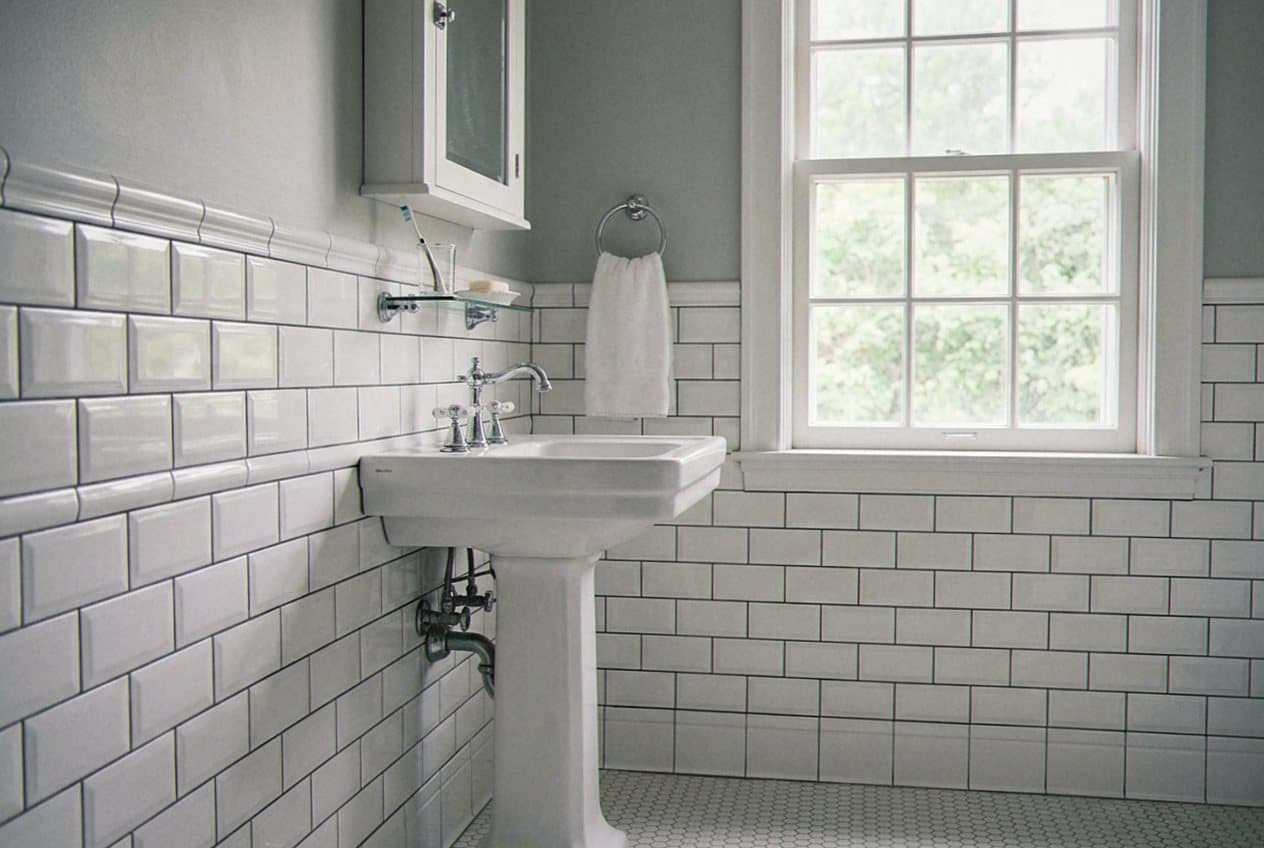
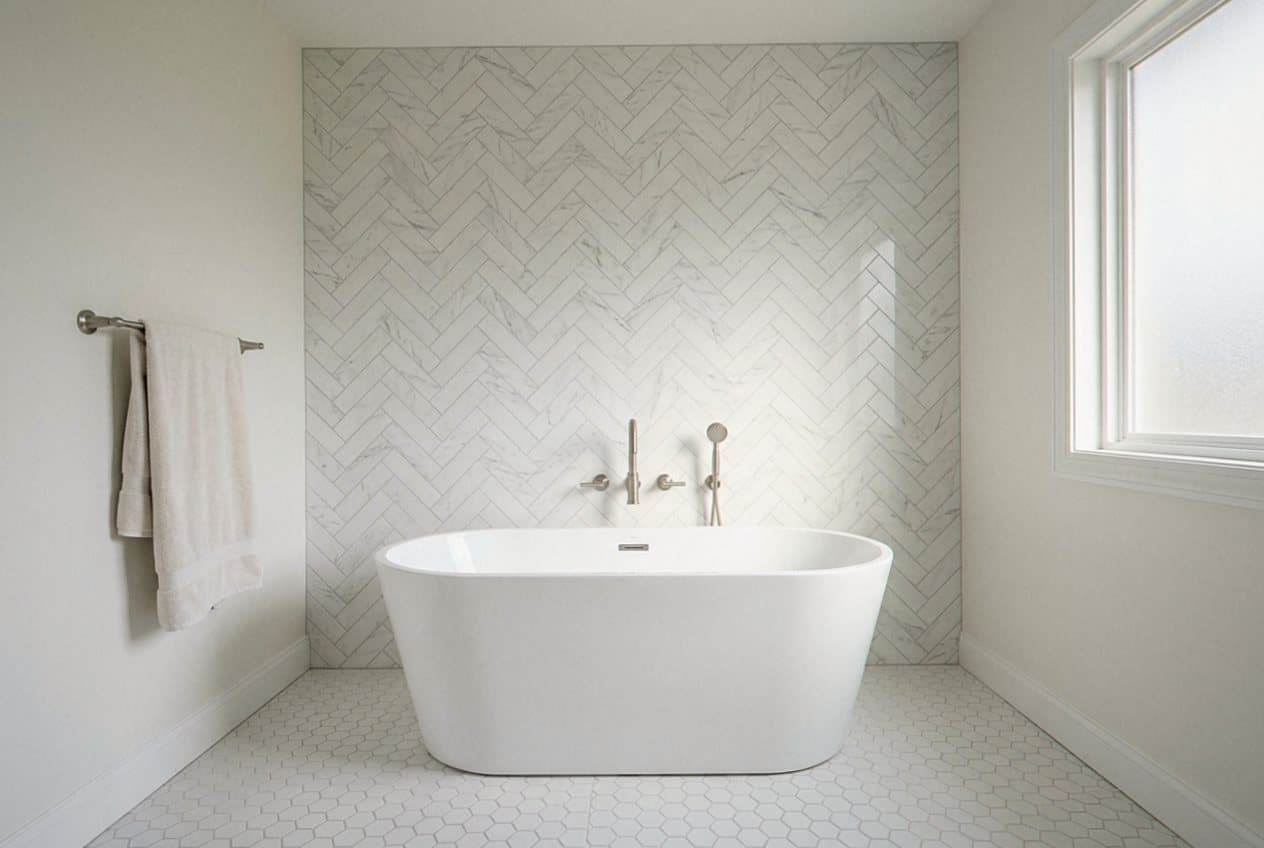
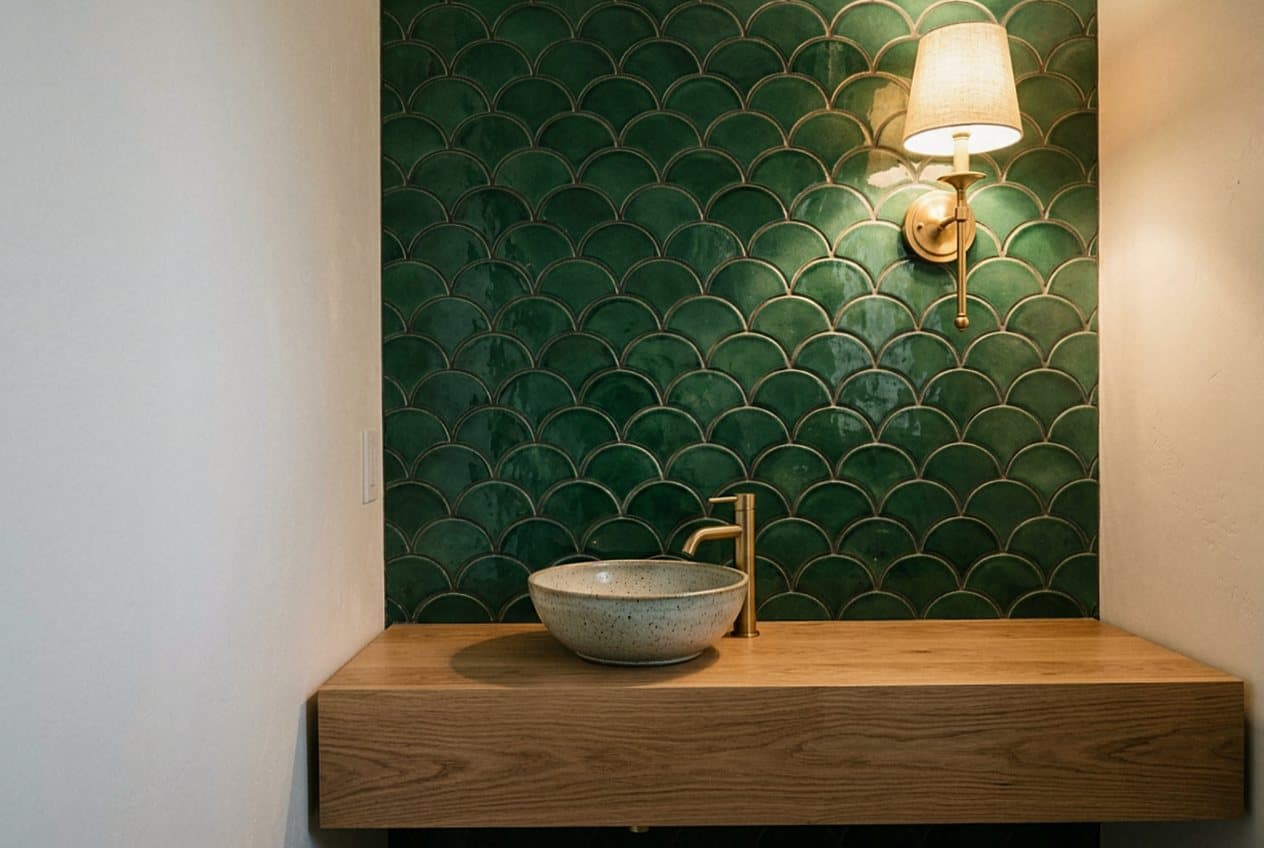
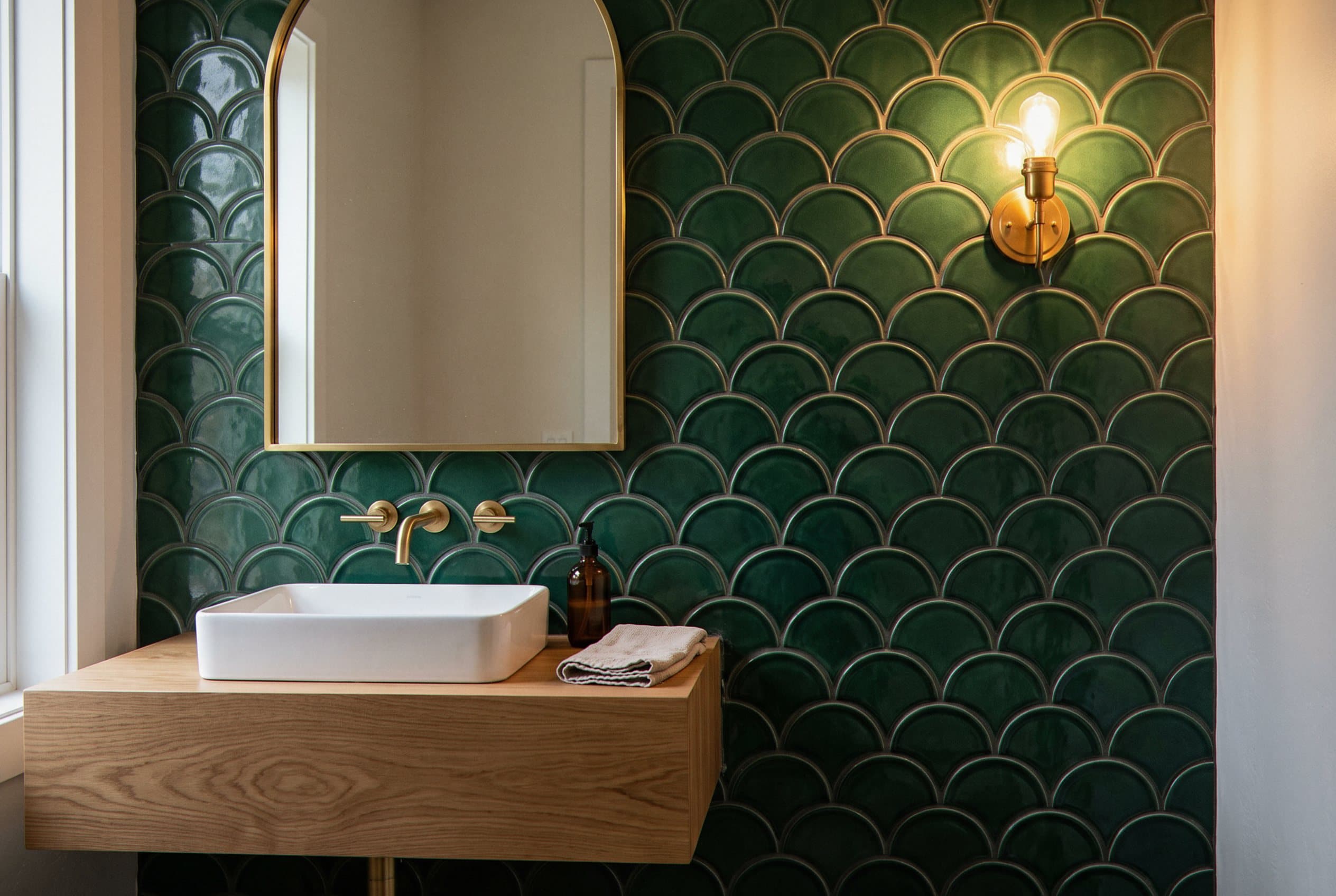
What a bathroom tile job looks like when we do it
Most bathrooms in Springfield are small, and that is exactly why the work under the tile matters so much. A shower sheds water every single day. If the pan is flat, or the backer board sits against bare studs with nothing waterproof over it, the damage starts behind the wall where nobody can see it. So we start every bathroom the same way. We pull out what is there and we look at the subfloor. In the older homes around Enos Park and Vinegar Hill we often find wood decking that flexes between the joists, and we stiffen it before anything else happens. Tile does not bend. The floor under it cannot either.
Once the floor is solid we set the layout, and this is the part you feel later even if you never think about it. We dry lay the field so the cut tiles land in the corners instead of beside the vanity where your eye goes first. Wall courses get planned around the niche and the curb, so the grout lines run clean into the corners rather than dying halfway up a wall. In a Springfield ranch with a five foot tub alcove, that planning is the whole difference between a tidy bathroom and one that always looks a little off. Then we waterproof. Then we tile, and then we grout.
- We handle the whole room: floor, walls, tub surround, shower pan, curb, niche, and the transitions at every doorway.
- Waterproofing goes in before any tile, so water stays in the shower instead of soaking the framing behind it.
- We stiffen soft wood subfloors in older Springfield homes so the tile and grout do not crack within a year.
- Slope, drain height, and pan build all get checked with a level before a single tile goes down.
- One crew from demolition to the last bead of sealant, and one phone number when you have a question.
Springfield weather works on a bathroom more than people expect. Summers here run humid, and a bathroom with a weak fan holds that moisture for hours after a shower. Winter is the opposite problem. The furnace pushes dry air through the house, the framing shifts a little, and rigid materials feel every bit of it. That is why we leave movement joints where the tile meets the tub, the walls, and the inside corners, then fill them with flexible sealant instead of grout. It is a small step, and rushed jobs skip it all the time. It is also why those jobs show cracked corner lines by the second winter.
If you are planning a bathroom in Springfield, Chatham, Rochester, Sherman, or anywhere else in Sangamon County, call us and tell us what you have. We will walk the space, look at the subfloor and the drain, and tell you straight what the job needs. If new tile can go over what is already there, we will say so. If it cannot, you will hear why before you spend anything.